


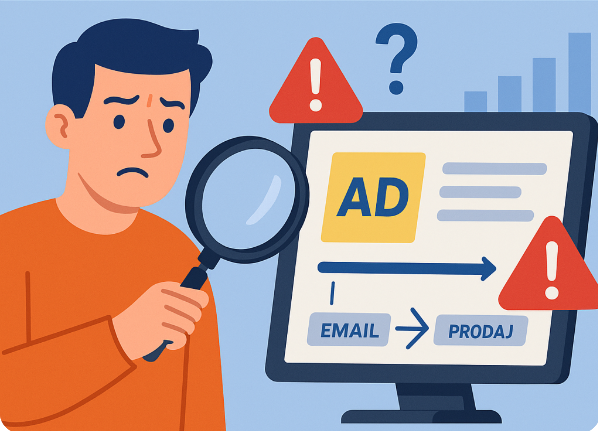
Are you sure your ads are working as they should?
At first glance, everything works: advertising is running, leads are flowing, traffic is there. But over time, the cost of the application increases, and the result is the opposite.
And most businesses believe that “this is how it should be.”
In fact, it is not. System errors often accumulate in advertising that are not visible from the inside. These are what an express audit reveals.
Here are 7 of the most common, hidden problems we regularly find in advertising accounts — even those that are “run by an agency” or “set up by an experienced specialist.”
1. Outdated, incorrect or chaotic audiences
What is the essence of the problem?
Target audience is the foundation of advertising. But very often accounts “live” on:
- retargeting to people who visited the site six months ago,
- LAL audiences (lookalike) collected before rebranding or product changes,
- cold audiences without clarifications (such as “women 25–55, Ukraine”).
And it also happens that advertising only works for “everyone who clicked on the ad,” and this group already includes competitors, bots, and random clicks.
Consequences:
- budget is spent on people who no longer intend to buy;
- irrelevant audience lowers quality score and increases cost per impression;
- retargeting is “overheated” — you show ads to those who are already ignoring you.
How does an audit help?
We:
- we check from which sources the audiences are formed;
- we assess their relevance, frequency of update, size, reach;
- we test the division into micro-segments – for example, “abandoned the cart”, “read the blog”, “watched the video to the end”, etc.
2. The landing page doesn’t convert (even if the ad is cool)
What is the essence of the problem?
Even if the ad is a masterpiece, everything can fall apart the moment the user navigates to the landing page:
- the page takes more than 3 seconds to load – goodbye;
- the first screen does not answer “what is this?” and “why do I need this?”;
- the form is too long or does not work at all;
- the mobile version is a disaster.
Consequences:
- a sharp drop in the funnel after a click;
a lot of traffic without conversions = a drain on money;
a false impression that “advertising doesn’t work.”
How does an audit help?
- we check the technical indicators of the page: speed, adaptability, UX;
- we analyze the correspondence of the page to the advertisement (does the promise come true?);
- we test the logic and clarity of the form, CTA, and the structure of the first screen.
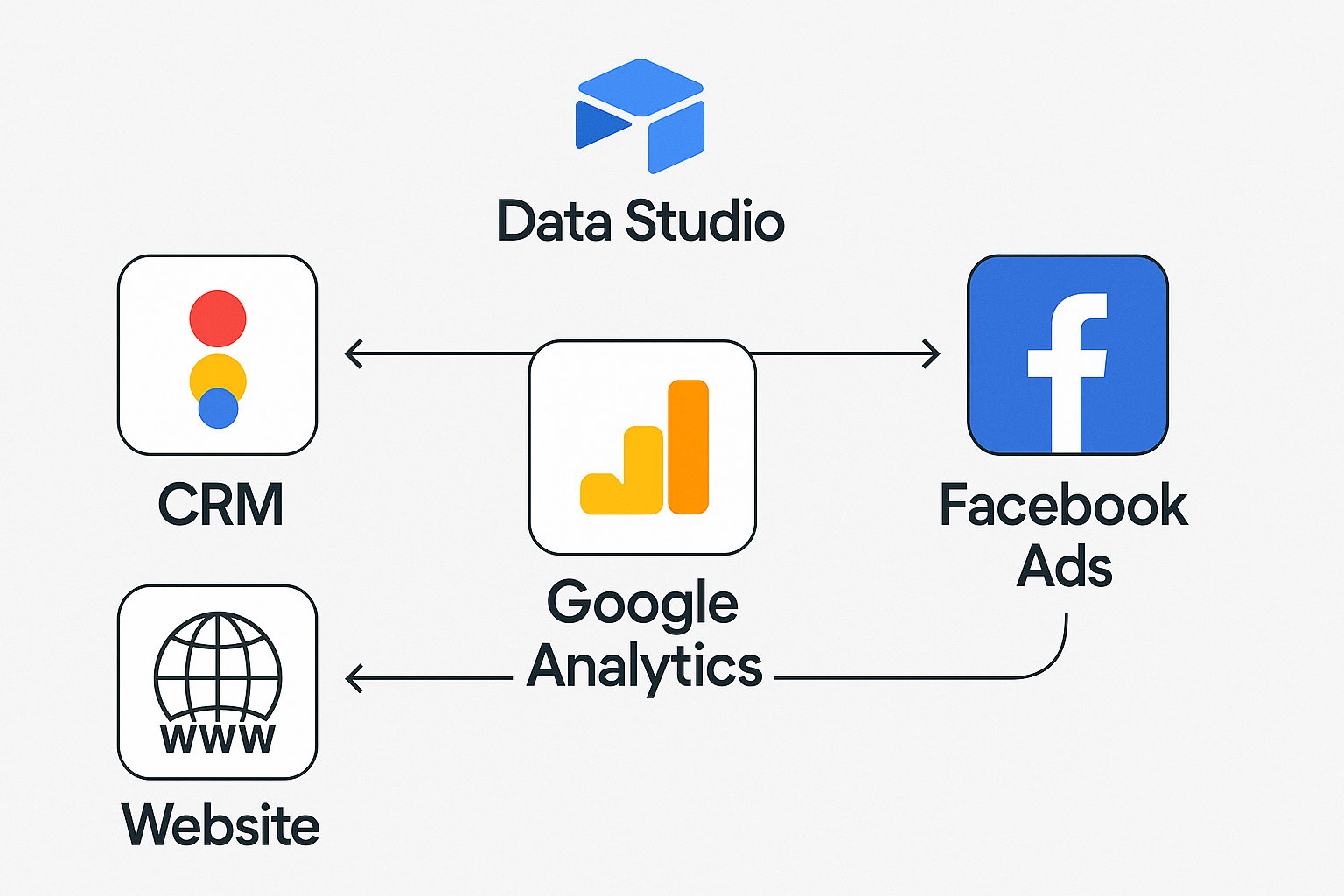
3. Lack of end-to-end analytics
What is the essence of the problem?
Many businesses still have:
- The website counts applications, Facebook counts them separately, Google counts them separately;
- no one knows which advertising actually brings the client;
- CRM is not connected to analytics or is absent altogether.
And there is no UTM. And sales managers don’t note where the customer is from.
Consequences:
- it is impossible to calculate the real value of a customer from each channel;
- the budget is distributed randomly;
- you pay for leads that do not pay off.
How does an audit help?
- we check the connection of CRM, website, Google Analytics, Facebook Pixel;
- we configure the correct transmission of events and tags;
- we create a dashboard that shows ROI, CPA, conversions for each ad.
4. Events, conversions, and pixels are set up incorrectly
What is the essence of the problem?
Google Ads або Meta can count as a conversion:
- a click on any button,
- a simple visit to the “Thank You” page,
- or even a page reload.
Or vice versa – conversions are not recorded at all, because:
- Facebook Pixel duplicates events;
- in GTM, one event triggers another twice;
- events don’t align with what the business considers a valuable action.
Consequences:
- distorted analytics;
- the algorithm is trained on the wrong actions;
- campaigns are optimized for conversions, not applications.
How does an audit help?
- we conduct an audit of events and pixels on the website, in GTM, Meta Events Manager, GA4;
- we test the actual triggering of key actions;
- we agree on what exactly to consider a conversion, and where to track it.
5. Creatives without hypotheses, tests, and adaptation
What is the essence of the problem?
In many accounts:
- 1 creative — for everyone, for everything, always;
- image from the bank + text in the style of “we are your best choice”;
- lack of testing of titles, formats, styles, calls-to-action.
Consequences:
- creatives burn out after 2-3 weeks;
- it is not clear what really works;
- targeted advertising loses effectiveness even with a normal product.
How does an audit help?
- we analyze the history of A/B tests (or lack thereof);
- we show which creatives should be replaced, which should be retested;
- we provide hypotheses for new creatives that better match the target audience segments.
6. Some campaigns drain the budget to zero
What is the essence of the problem?
An advertising account often grows chaotically:
- old campaigns are not turned off;
- duplicates or test variants are created and remain active;
- groups/ads are not regularly audited for performance.
Consequences:
- 20–40% of the budget “goes down the drain”;
- the average performance of the account drops;
- the cost per result increases and ROAS drops.
How does an audit help?
- we check the campaign structure: does it correspond to the logic of the product and the funnel;
- we identify ineffective groups/keywords/ads;
- we give recommendations on how to repackage the account without losing the algorithms.
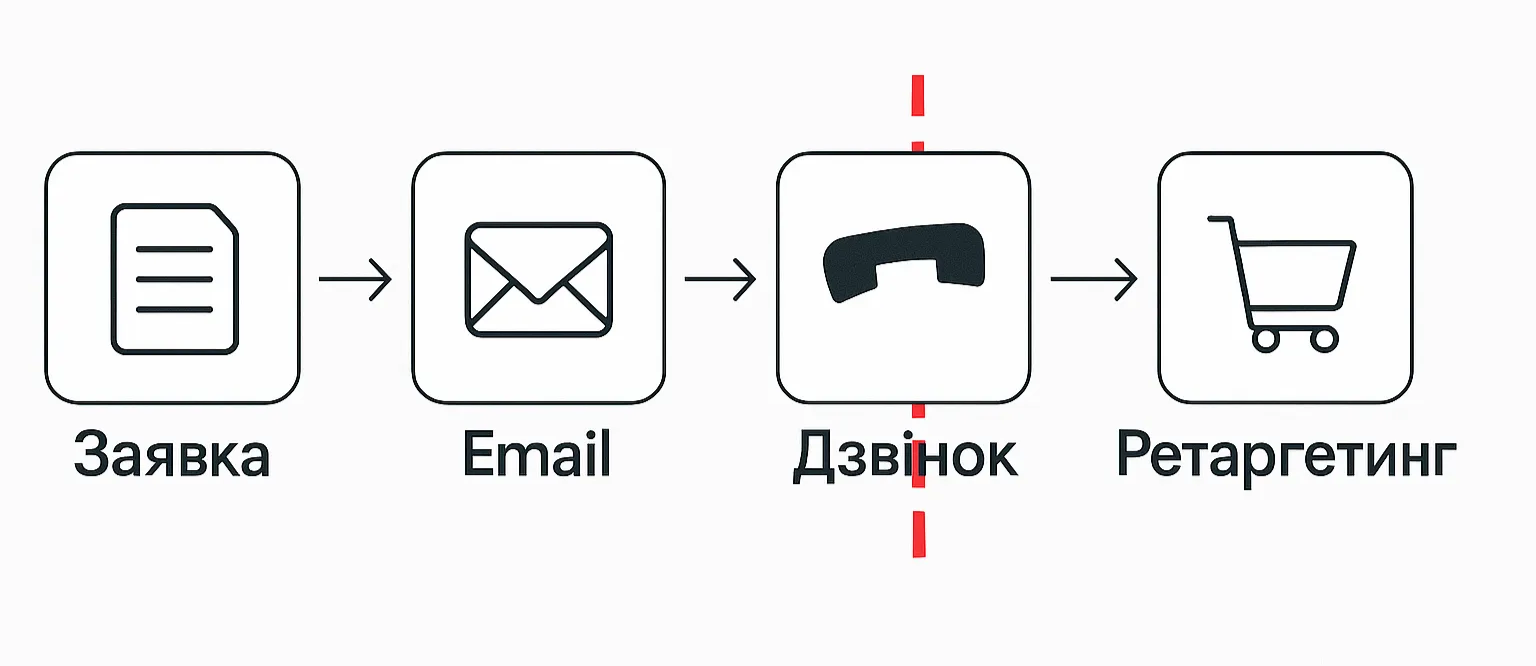
7. The post-click funnel doesn’t work
What is the essence of the problem?
Advertising is just the first touch. But what next?
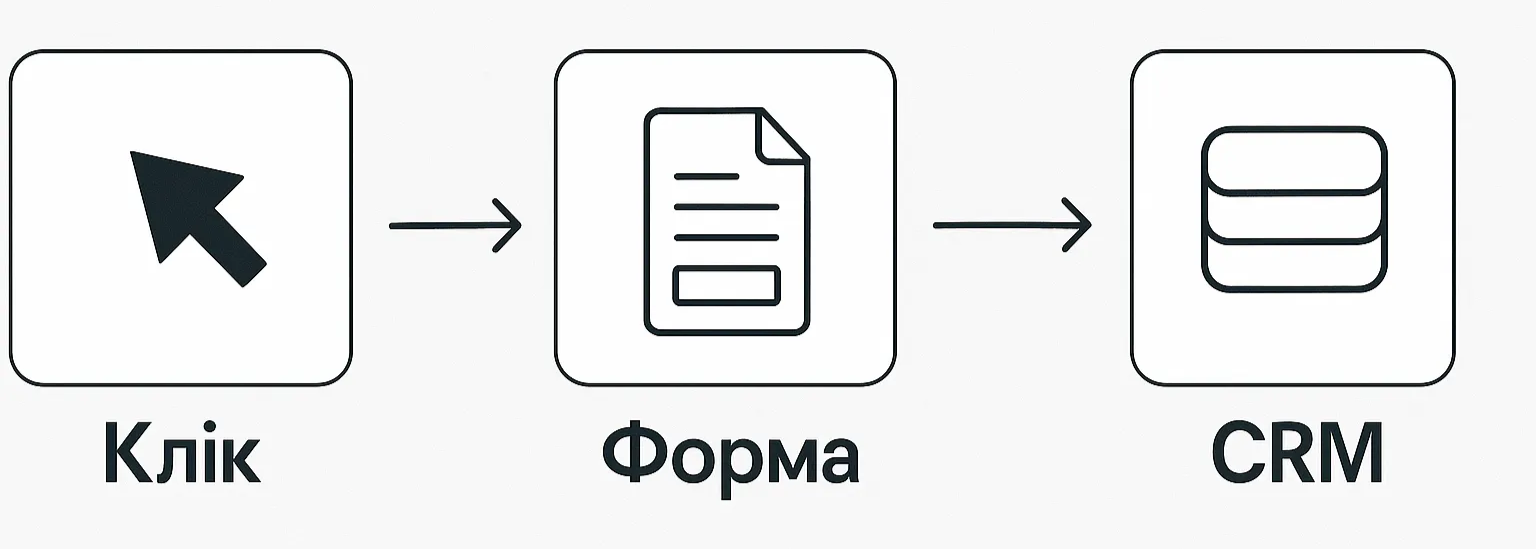
- No emails after the application → the client forgets.
- No automatic contact → the manager didn’t have time, the client left.
- No retargeting → the user didn’t return.
Consequences:
- Applications are not converted into sales;
- users are “lost” after clicking;
- trust and repeated interest are lost.
What does an express audit of advertising campaigns provide?
| There was | It became |
|---|---|
| “Probably advertising the rules” | Accurate diagnosis of where the budget is being wasted |
| The “Facebook or Google?” controversy» | End-to-end analytics: see the real ROI of each channel |
| Hypotheses “let’s try…” | A clear advertising optimization plan for 7–14 days |
| Constantly increasing CPA | Prioritization of actions that immediately saves the budget |
Key point: an express advertising audit is not a 50-slide presentation, but a checklist + roadmap that can be implemented tomorrow.
Who needs an audit right now?
- Businesses where the cost of a lead is increasing, but sales are stagnant.
- Companies that have switched to a new marketer and want to quickly understand “what they inherited.”
- Projects at the scaling stage: before pouring an additional $10,000 into the target, a technical audit is needed.
- Startups with a limited budget: advertising optimization is cheaper than excess traffic.
Conclusion: no advertising is worth the budget if it has not been audited
Sometimes it is enough to fix only 2 of the 7 problems described – for the result to grow 2-3 times. But the worst thing is not the mistakes.
The worst thing is when you don’t even suspect about them.
👉 Express advertising audit from Atlant Digital is a quick way to check whether your advertising really works or just looks nice in the office.