


Solution and Process: How We Adapted the Strategy to Seasonality
1. Preparation and Analytics Setup
The first step was configuring analytics systems to track all key user actions on the VIP Lake Travis website. This included:
- Setting up Google Analytics 4 and Google Tag Manager (GTM). Using these tools, we configured tracking for core events such as phone number clicks and form submissions. Since every interaction on the site was a potential conversion, we ensured detailed tracking of each action for accurate analysis of campaign performance.
- Collecting initial user behavior data. With GTM in place, we gathered the first insights into how users interacted with the site — how much time they spent on different pages and which elements captured their attention. This allowed us to build a more accurate picture of the target audience’s behavior.
2. Launching Search Campaigns in Google Ads
Launching search campaigns was the first step toward testing keyword hypotheses and gathering initial results that would serve as the foundation for further optimization.
- Keyword testing. We started by running search ads for broad queries such as “boat rental” and “Lake Travis tour.” These campaigns gave us initial data on keyword performance — which keywords generated the most conversions and which ones were worth filtering out for more targeted advertising.
- Adding negative keywords. During data analysis, we identified keywords that were consuming budget without driving conversions. By adding them to the negative keyword list, we significantly improved campaign efficiency and freed up budget for relevant queries.
- Bid optimization. Based on per-query performance data, we set flexible bids — raising them for high-converting queries and lowering them for underperforming ones. This approach ensured optimal budget allocation.
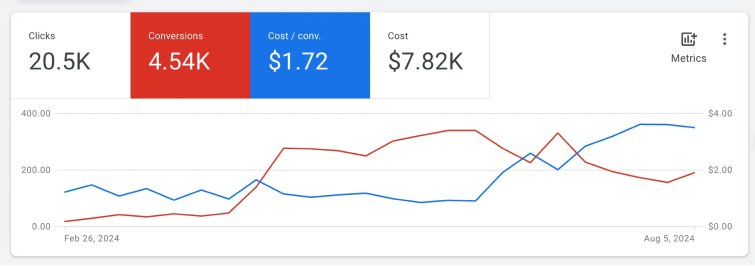
Why this matters: Search campaigns allow you to quickly test keyword performance and gather initial audience data. By adding negative keywords, the budget is used more efficiently — which is especially important for a seasonal business with a limited window to deliver results.
3. Implementing Performance Max
The next step was launching Performance Max (PMax) — a campaign type that reaches users across multiple Google platforms, including YouTube, Gmail, and the Display Network.
- Optimization based on behavioral data. PMax allowed us to leverage previously collected user data to build ads that adapt to individual preferences and needs. Using machine learning, the system automatically tuned ads across channels to maximize reach.
- Testing different ad formats. PMax enabled us to test multiple ad formats and identify what type of content performed best on each platform. Video ads on YouTube, for example, showed significantly higher conversion rates among younger audiences — an insight we factored into campaign configuration.
- Cross-channel budget optimization. PMax dynamically allocates budget across channels based on performance, so we were able to shift more spend toward the platforms delivering the strongest results.
4. Remarketing: Re-Engaging Interested User
The final — but equally important — stage was remarketing, which allowed us to bring back users who had already interacted with the VIP Lake Travis website but hadn’t completed a booking.
- Retargeting warm audiences. We set up remarketing campaigns targeting users who had visited the site, browsed service pages, or added items to their cart without finishing the booking process. These users typically have high conversion potential, and remarketing gave them the nudge they needed to complete the action.
- Ad personalization. Remarketing campaigns used personalized ad content matched to each user’s interests. For example, users who had viewed boat pages were shown discount offers on boat rentals or additional services to enhance their experience.

Why this matters: Remarketing increases conversions among users who have already shown interest in a service but haven’t made a purchase. For a seasonal business, it’s a way to hold onto warm leads who might easily drop out of the funnel without an extra nudge.

Industry context and global examples: Performance Max is particularly valuable for seasonal businesses, as multichannel campaigns help maintain presence at every stage of the customer journey — increasing the likelihood of repeat sales and reducing drop-off at each funnel stage. This approach has been validated by agencies such as Business Coaching UK.