



Зміст статті
What is Local Search and How It Works
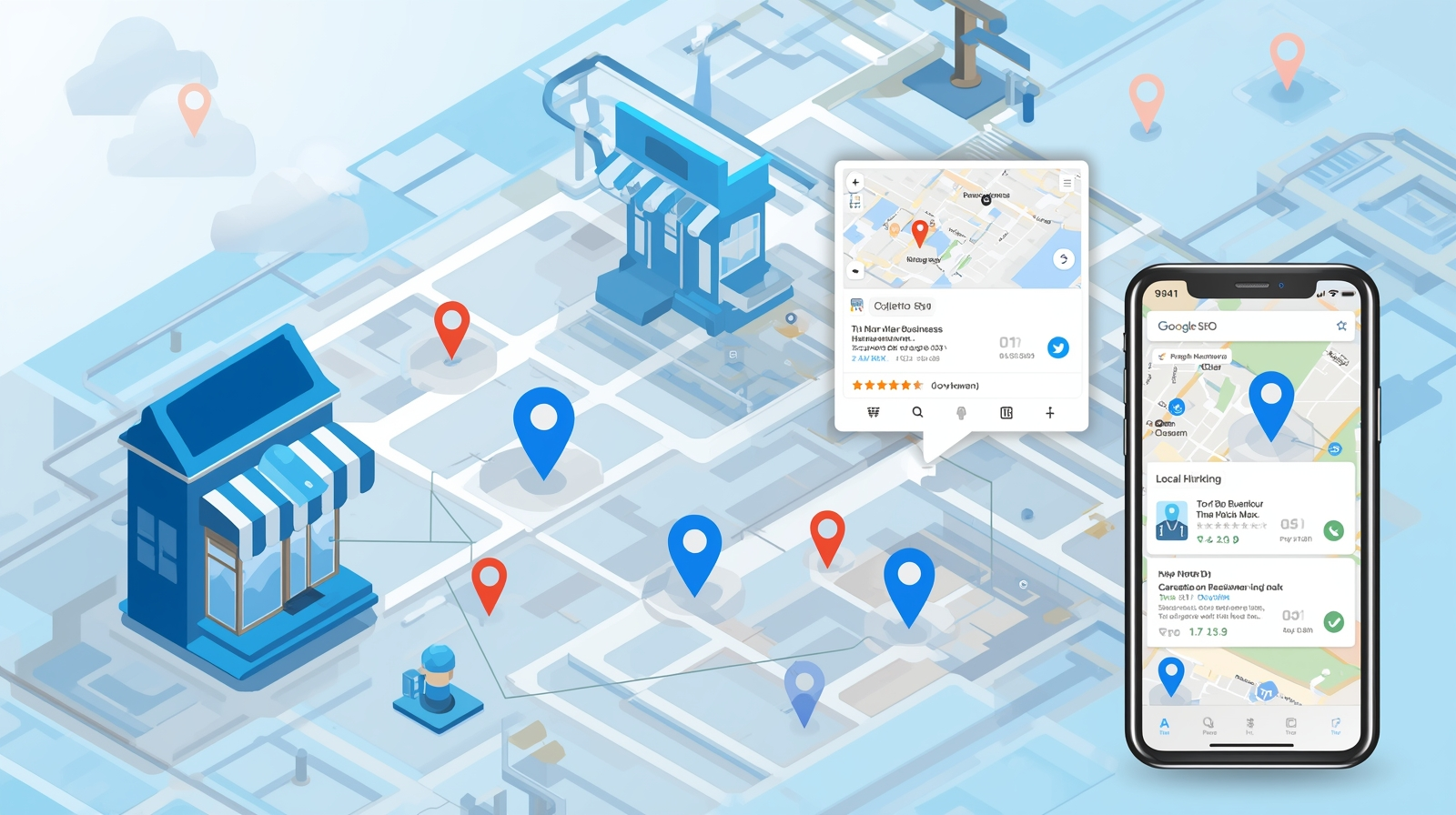
Local search is a set of results where search engines (like Google) consider not just relevance but also location, business profile activity, NAP data accuracy (name, address, phone), reviews, and local signals like citations, neighborhood mentions, or structured data. In real life, users see:
- Local Pack — a block of 3 results on the map with ratings, hours, and a directions button.
- Google Maps — a larger listing with filters for distance, rating, and hours.
- Organic SERP — your website’s local landing pages that mention a city, neighborhood, or branch.
Google matches queries like “nail salon Prague 2”, “courier Český Krumlov”, or “studio near me” with businesses that have complete profiles and geo-optimized sites. The more complete your profile, the better your local content, and the stronger your behavioral signals (calls, direction clicks, map usage), the higher your chances of making it into the top 3.
What is Local SEO (Local Search Optimization)
Local SEO is a structured approach to improving your visibility to nearby customers. It includes optimizing your Google Business Profile, tailoring your site for geo-queries, adding structured data, collecting local citations, and managing reviews and photos. A well-executed local SEO strategy links your profile, site, content, and reputation into a single funnel. For local businesses, it’s the fastest way to get calls — someone searches nearby, sees you, gets directions, and reaches out.
Why You Need Local SEO
Local SEO is not just an “add-on” — it’s a full-fledged sales channel for brick-and-mortar locations and geography-bound services. It helps to:
- Capture hot leads. People are already searching “near me” — just show the phone and route.
- Lower lead cost. Conversions from Local Pack tend to be higher than from general search.
- Win the local competition. In areas with 10 similar businesses, better reviews, photos, hours, and NAP win.
- Build local brand awareness. Posts, replies, and offers drive more direct and repeat visits.
In practice, local SEO boosts overall organic visibility: geo-landing pages index better, website traffic grows, and phone clicks increase thanks to unified contact details.
How Local SEO Works
The “3 pillars” of local SEO:
- Business profile (Google Business Profile). Complete information, categories/services, attributes, media content, posts, Q&A, regular updates.
- Website and content. Geo-optimized landing pages by city/area/branch, map and directions, schedule, location photos, LocalBusiness schema, fast mobile version.
- Local signals and reputation. Reviews (frequency + quality of responses), citations in local directories/media, neighborhood mentions, participation in local events.
These elements must work together: your profile drives directions and calls, while the landing page converts interest into a lead. That’s why local SEO isn’t just about visibility — it’s about converting searches into revenue.
Who Needs Local SEO
Local SEO is essential for businesses where distance and trust are key to closing a deal:
- beauty, wellness, private clinics;
- mobile services, repair, cleaning;
- cafes, restaurants, dark kitchens, delivery;
- clubs, studios, schools, in-person courses;
- warehouses, pick-up points, showrooms;
- lawyers, notaries, accountants;
- franchise or multi-location businesses (each branch = separate project).
If you’re just getting started from scratch, local SEO is a fast way to generate your first calls before investing heavily in broad promotion. For chains, it helps distribute demand across locations and avoid cannibalization.
How to Optimize Your Site for Local SEO
Do everything step by step, and track key metrics: calls, click-to-call, “get directions” clicks, and positions in the Local Pack.
Register with Google My Business
Create or verify your Google Business Profile (this is classic “Google My Business optimization”). Fill in:
- main and additional categories (strictly relevant),
- services and price lists,
- description with area and specialization,
- NAP — name, address, phone (must match the site),
- working hours, special schedules, holidays,
- photos of the facade, interior, team, process; short videos.
Post regularly — promotions, events, news. The more active your profile, the more trust and clicks you get. This is the foundation for Google Maps visibility.
Use Local Search Queries
Gather search terms based on city, district, streets: “service + district”, “near me”, “on the map”. Split it wisely: part goes to your profile (services), part to geo landing pages. Don’t keyword stuff — local SEO works best with natural, human-readable language.
Create Local Landing Pages
For each branch/district, build a dedicated page: address, map, parking, entrance photo, nearby transport, UTM tags, FAQ block. That’s what local site promotion looks like — you remove friction and help users reach you. For networks, build a reusable template for scalability.
Perform On-Page Optimization
- Title/Description with service + city
- H1/H2 with geo-tags
- Fast mobile version (Core Web Vitals matter)
- Unified NAP block on all pages
- Social proof: reviews, ratings, badges
Add LocalBusiness Structured Data
Include address, phone, hours, geo-coordinates. For niches — specify the type (e.g., MedicalClinic, HairSalon, LegalService). Structured data helps Google better connect your profile and pages — boosting local performance.
Build Local Backlinks & Citations
Citations in regional directories, media, associations — these are strong trust signals. Keep NAP consistent and avoid low-quality directories. Partner with nearby businesses, join local events — this is local promotion that works both online and offline.
Respond to Reviews
Ask for feedback after visits (QR code, SMS template), and respond to all reviews. Handle negative ones professionally: show empathy, offer solutions, post updates. Consistent replies improve both conversions and rankings.
Refine Your Categories
In your profile, choose the correct business categories — this directly impacts which queries you show up for. A wrong category can kill visibility even for a strong site.
Use Social Media to Support Local SEO
Social media boosts local signals: tag locations, post team and venue photos, highlight promos. Use UTM links and track everything in analytics. This traffic indirectly strengthens local visibility and trust.
| Stage | What’s Done | Result |
| Foundation | GBP profile, NAP, categories, photos | Visibility in Maps and Local Pack |
| Website | Geo landing pages, directions, structured data | More clicks on “directions,” more calls |
| Reputation | Reviews, responses, widgets | Higher CTR and conversion rates |
| Signals | Citations, local partnerships | Improved rankings |
| Analytics | Events, UTM tags, dashboard | Understanding lead cost |
Conclusion
In short, local SEO is a systematic process focused on optimizing your profile, website, and reputation with a geo-targeted approach. It solves the key task for local companies — making your business visible at the exact moment a customer searches “near me.”
You can start from scratch and build the foundation in 2–3 sprints: business profile, geo-pages, reviews, and citations. Then comes content growth, partnerships, and result tracking. For chains, add location management, page templates, and consistent NAP rules.
If you want a service with a clear process, you can order local SEO as “project + support” — you’ll get a forecast, task checklist, and metrics. Transparent pricing, lead cost tracking, and monthly reporting show how the channel performs. Based on Atlant’s experience: when local SEO is set up right, and the “profile + geo-page” combo is working, calls grow in the first weeks, and Google Maps visibility becomes stable. This applies to Ukraine and other markets too.